November 10, 2009

It’s Semper Fidelis Day

234 years ago today, the United States Marine Corps was formed. Originally called the Continental Marines, the Marine Corps was formed by a resolution of the Continental Congress (America’s first legislature during the Revolutionary War).

I’m not a marine. In fact, I’ve never served this country in formal uniform. But I enjoy American history, and I value my freedoms. I think this is an important day, and I have a few words to say about it.

Do you know what also happened on November 10th in history? On November 10th, 1942, Nazi Germany took Vichy France. Lest you think “Vichy” is a place, it is not. “Vichy France” is synonymous with ”Vichy Regime.” This is the common name for the government that organized France at this time.

The vastly different implications for these two events, which occurred on the same day in history, appears ironic to me. On the one hand, you have the creation of the Continental Marines, a volunteer force of spirited patriots who desperately believed in political freedom and small government. And on the other hand, you have a vulnerable people whom are conquered by the tyranny of a madman, his hopelessly brainwashed countrymen and a fascist, juggernaut government.

As long as men are ambitious to wield power and oppress other peoples, there must be some organized force in this world that seeks to protect that which needs to be protected.

So this is my small way of saying thank you. Happy birthday, Marine Corps.

November 2, 2009

Success & Failure: A Parable

There once was a man who enjoyed great success in life. Everything he set out to accomplish happened just as he intended. In his and the world’s eyes, this man was ideal.

The successful man held no trust in anyone or anything, save himself. He could do the work of 10 men, and to his knowledge, no other man could match his focus and industry. And so this man worked long, lonely hours and garnered the attention and praise of the world.

As time passed, the successful man’s renown grew. He was surrounded by intrigued men who sought to find the secret of his success. The successful man loved the praise, and so he never turned admiring onlookers away.

Likewise, there was also a man who suffered consistent failure. He would put his hand to all kinds of tasks just like the successful man, but unlike the successful man, he never met his own expectations.

The unsuccessful man worked harder than the successful man. He could do the work of 15 men, but everything he attempted eventually failed. He sought praise like the successful man, but he could not find it. The world paid no attention or respect to the unsuccessful man.

After much frustration and public ridicule, the unsuccessful man quit seeking the praise of the world and became a plain man of the soil. He planted plain corn, lived in a plain home, started a plain family and quietly worked away the plain years of his youth.

Years passed, and then the land was overtaken by severe economic hardship and a great famine afflicted it. Everyone suffered, so that even food was hard to come by.

However, the unsuccessful man’s crops were miraculously unaffected by the great famine. The land on which he randomly chose to settle remained rich and fruitful, while all the other land withered and died.

And so the world turned to the unsuccessful man for help. They cried out for food from his crops, and pleaded to have shelter on his land. And in spite of the world’s ridicule, the unsuccessful man did all that he could to help. He worked as hard as he could, and all the world saw that he was truly more industrious than the successful man. He truly could do the work of 15 men.

But when someone raised their voice to praise the unsuccessful man, he had no regard for it and asked that he not be publicly praised - his years of failure were still painfully embedded in his heart.

All the while, the successful man refused to approach the unsuccessful man. He continued to work long, lonely hours, but to no avail. The economic hardship and great famine had stripped everything away from the successful man, and no one was there to console him.

He set out to rebuild his empire, but could not. He attempted to grow food, but all the land was worthless. And when the successful man ran out of food, he still refused to rely on the unsuccessful man – his years of success and self-reliance made him exceedingly prideful.

And one day after much stubborn suffering, the successful man died.

Shortly thereafter, the famine passed and the economy was restored. Everyone went back to life as usual, and just like in the past, the unsuccessful man was forgotten.

Years passed, and then a young man, full of ambition and ability, decided that he would become the next successful man of the land. He began building his empire, and the world soon took notice. He was just as successful as the last successful man, and he loved the praise and adoration, too.

But he was not as industrious as the unsuccessful man – the young successful man’s parents told him stories of the unsuccessful man’s hard work on the farm, and how he could do the work of 15 men. They told him about how he fed the world in a severe famine, but did not want any recognition because of his many years of failure. The young successful man loved these stories, and he sought to learn the secret of the unsuccessful man’s great industry.

One day the young successful man wrote the unsuccessful man the following words: “Although you never succeeded in gaining the praise and adoration of men, you are more industrious than any man I’ve ever heard of. Could you teach me to be more successful?”

This is what the unsuccessful man wrote back: “As for now, the world is enamored with your success, and they adore you for it. And for a season of time, your success will last. But when that season is over and hardship comes, the world will forget about your success – but you, my young friend, you will still be enslaved to it.”

When the young successful man received these words, he read them, and then promptly threw them away, returning to his business as usual.

Shortly thereafter, the unsuccessful man died of old age. He considered himself unsuccessful all through life, but his family and true friends did not agree. When the wife of the unsuccessful man was rifling through her husband’s belongings, she found his journal. The last entry was written as follows:

“Life has shown me that easy success is but a fickle wind that blows on only the most unfortunate of people. Although it comes with plenty of praise, recognition and adoration, it will ensnare a man in crippling self-absorption, of which few ever escape. Failure, on the other hand, is like a bitter medicine. The application of it creates such horrible discomfort, but in the end, it’s the only remedy that will reveal the natural sickness in a man’s heart, and thus lead him to see the world rightly. And so I find that Truth cannot be understood by a man until he understands the extent of his own heart’s sickness. My failures taught me the extent of mine.”

The unsuccessful man’s family now carries on his work. Watching and waiting for the next famine.

Medicine

June 8, 2009

Watt’s Up with the Lack of Accountability?

The U.S. government’s inability to “practice what it preaches,” so to speak, is never a colorless topic. The irony for this week comes from the Department of Energy. As with most government agencies, it’s easy to waste tax dollars when you’re not earning them.

Over the last several months, the government has been in the business of handing out money like it’s going out of style. Bailouts, stimulus packages, financial incentives, debt restructuring programs – and don’t forget – Department of Energy objectives. In fact, $38.7 Billion of the stimulus funds went to the Department of Energy in order to develop more efficient methods of creating and using energy.

Interestingly, the department’s devotion to their own mission needs some serious reinforcement.

The results of a recent audit showed that the Department of Energy does not follow its own recommendations for responsible computer monitor use. At one particular site, all 20 of the department’s computer monitors  were set to never shut down. And at another site, 44% of the computer monitors were set to shut down after 48 hours of non-use, which is 144 times longer than their recommended standard.

The auditing team concluded that the Department of Energy could save $1.5 million annually if they held to their own guidelines.

Perhaps the most frustrating aspect of this event is the unfair reality that government departments are not plagued by layoffs, despite their wasteful use of resources and lack of direction. Instead, they are rewarded in times of hardship; if it wasn’t for the bailouts, the Department of Energy would have never seen that $38.7 Billion!

As for how this affects us Wichitans, I think we should be mindful of our energy usage, no matter how low the bar is set by the Department of Energy.

If only energy was like the U.S. dollar. We could just call up the Federal Reserve and have them print some more electricity.

The government monitors of energy failed to monitor their own monitors - How's that for convoluted government-speak!?!

The government monitors of energy failed to monitor their own monitors - How's that for convoluted government-speak!?!

June 2, 2009

5 Reasons to Fear the Financial Calculator

If you have financed a house, allocated your 401(k) or worked with a financial advisor, then you’ve probably been exposed to the wildly popular “financial calculator.” For those who haven’t had such pleasure, allow me to explain.

A financial calculator is a relatively simple tool. In short, it’s a process by which someone attempts to project future results based on current assumptions. Let’s take a new home buyer as an example. If someone wanted to project their monthly payment on a new home, they could use a mortgage calculator, which is a type of financial calculator (you can find mortgage calculators all over the internet). They could input the purchase price, insurance, taxes, term length and interest rate to project their monthly principal and interest payment. It’s really quite simple. By using this tool, the home buyer can make an educated decision about how much home he or she can reasonably afford.

In the case of the mortgage calculator, there isn’t much ambiguity; in other words, the buyer’s experience will most likely be quite similar to the calculator’s projections. However, in this regard, the mortgage calculator is unique.

Perhaps the most widely utilized financial calculator is the retirement planning calculator. It operates much like the mortgage calculator – someone can input how much money they need for retirement, their mix of stocks and bonds, the inflation rate, how long they will live, their tax bracket, and their current savings. In turn, the calculator spits out the annual contribution required to meet those retirement needs.

It all seems pretty logical, right? You get on the internet, put in the numbers, click the “calculate” button, and then watch your retirement plan / college savings plan / investment plan come to life. Or perhaps you go to a traditional financial planner who charges you money to do the same thing – sure they dress it up for you, but at the core, a traditional planner uses the same calculators you would find on the world wide web.

But wait a second!

Is it really that simple? Maybe you’ve heard the expression “life happens.” So my question is: What happens to the calculator’s projections when “life happens?”

For the remainder of this article, we’ll be looking at five key reasons why financial calculators are both unhelpful and harmful.

1. Assumptions Change

This is the most obvious problem with financial calculators. Interest rates, market prices, the inflation rate, your income, your tax bracket and your income needs are always changing. In fact, a traditional plan drafted even one year ago may already be obsolete. Thus, any time even one thing changes, the whole plan needs to be updated. However, calculators can’t be blamed for this. No tool can predict the future, and no matter how hard you try to avoid change, you won’t succeed. Nonetheless, calculators are weak in this regard because the numbers you input remain constant for the entire calculation.

2. Calculators always supply the minimums

What if you need more retirement income than you think? What if the market tanks 2 years before retirement and your annual contribution over the last 20 years wasn’t enough? What if you have an emergency and need to access some of your retirement capital? These are very reasonable questions that financial calculators cannot answer. The problem with all of these scenarios is that calculators recommend the minimums. Therefore, any negative change in the variables renders the plan a failure. In other words, the plan only works under a single set of circumstances – is that thorough planning? In this regard, financial calculators can be very harmful. Ask yourself: In a world of constant change, is it wise to shoot for the “minimum needs” in your retirement funding / college funding / investment strategy?

3. Math and money are not interchangeable

In mathematics the value of a number remains constant. However, numbers in money don’t hold a constant value. Because of inflation and changes in currency values, money does not remain stable. Thus, financial calculators perform linear equations with mathematical numbers. But money, on the other hand, does not always work like math. This is another reason why financial calculators can be misleading. Life and money are not abstract constants like math.

4. No financial decision is an island unto itself

This is perhaps the most overlooked problem with financial calculators. Each time you make a financial decision, there are a multitude of things that change. For example, if someone was looking to refinance a house, the mortgage calculator could be utilized. And by using it, the homeowner can project their new payment. But there’s so much more to consider. What about the change in the interest portion of the payment? How will that affect taxes? In turn, how will that affect savings? Will any equity be carved out? If so, how is it to be used? How close is the homeowner to retirement? How will the new mortgage deduction affect tax liability on qualified money?

Each portion of your financial landscape does not stand alone – everything is connected to everything else. If you make a change in one place, it will affect the performance of everything else. But calculators can’t account for that. Therefore, financial calculators and traditional financial planning can lead to mass inefficiencies in your overall plan.

5. Calculators only give you numbers, not strategies

Reducing your financial planning efforts to “how can I create the biggest number” is a damaging mistake. Once again, money and math are not the same. Calculators only show you how to get a bigger number; but they have nothing to say about tactical strategy. The account or market value of something means nothing in the long run. What counts is spendability, versatility, reliability, and accessibility. Calculators have nothing to say about any of these issues.

In conclusion, I find it remarkable how many advisors are still basing their recommendations on what a financial calculator spits out. The full financial landscape must be considered in order to develop successful solutions to complex problems like retirement and college funding. In this regard, I think Benjamin Frankling has something relevant to say: “By failing to prepare, you are preparing to fail.”

Thanks for reading and good planning. Click the “What I Do” tab at the top of this page for further information.

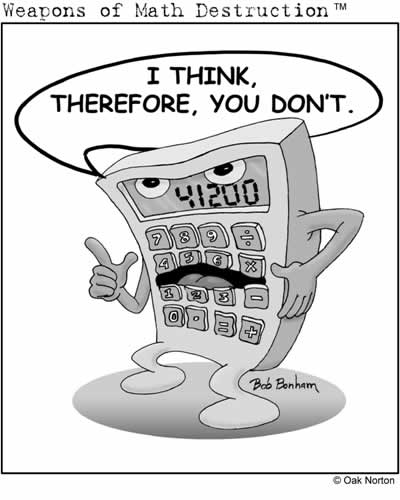
Is this the basis of your plan?

Is this the basis of your financial plan?

May 20, 2009

A Timely Book Review

There are, most certainly, at least three reasons to maintain a blog. The most common application of it, insofar as I can tell, is as a social addendum – that is, an extension of one’s regular conversation with friends and acquaintances. Although it may be a lazy form of conversing, it is a form nonetheless.

Secondly, it can be utilized as personal entertainment; this is my usual application. I can’t speak to the enjoyment of the readers, but I can confirm that of the writer’s!

A blog can also be employed to relate significant (but not necessarily useful) information. I’d like to think that all things significant are equally useful; but, just like beauty, the benefit of knowledge is in the eye of the beholder (unless, of course, we are talking about Jesus and/or Copeland. In both of these cases, devotees are not required to confirm inherent worth – especially Jesus)

As for this post, it is my intention to apply the latter use. Are you ready for some significant, but not necessarily useful information? Of course you are! So let’s get to it.

In the wake of the recent sub-prime mortgage meltdown, several experts representing various worldviews have offered up their opinions and diagnoses of the situation. Some of these proposals deserve focused attention; however, with others, I use the word “expert” very loosely.

One of these in particular won my undivided attention.

A highly capable (not to mention delightfully witty) economist by the name of George Cooper had something very interesting to say. In his first published book, “The Origin of Financial Crises,” Cooper lays out an incredible argument against the widely accepted “Market Efficiency Hypothesis” (MEH). According to the MEH, financial markets naturally seek an equilibrium, and thus, only external “shocks,” as we call them, can effectively throw them out of kilter.

If markets truly do seek a natural equilibrium, then asset prices are always accurately reflective of the actual worth of said asset. If this is true, then each movement of the market must be entirely random (Brownian motion), and disconnected from each previous movement. And as truth would have it, this is exactly how a vast majority of notorious economists view the markets – each movement, whether up or down, only as predictable as the flip of a coin.

However, Cooper has something to say about that. In his lucid consideration of historical economic realities, such as bank runs and the implosion of many debt-soaked societies, Cooper establishes a strong argument for a form of “memory” in the markets (Mandelbrot’s fractal geometry). In other words, an economy in a state of growth, according to Cooper, is predisposed to continue towards growth until debt levels exhaust the credit-creation process, sending the economy towards contraction. Likewise, an economy in a state of declension will continue to contract until all unsecured debt is eliminated, allowing for the credit-creation process to jumpstart the economy, so to speak.

The implications of Cooper’s findings could possibly mean that an economy that relies on leverage through credit (i.e. every major economy) has a natural tendency to swing from one extreme to another, far from the equilibrium described by the MEH camp. And as history shows, Cooper’s understanding of the markets is more supported by the historical data as compared to the Market Efficiency Hypothesis.

So what is the use in this knowledge? There are at least three takeaways. First, if markets have a natural tendency to move in one direction and then to suddenly and unpredictably swing to the other, then “timing” the market is incredibly risky (by timing, I mean the process by which investors use data in an attempt to “buy low” and “sell high” in order to gain the most profit). Secondly, if markets are naturally unstable, then the FED’s assymetric policy of encouraging huge “booms” of asset growth, while also discouraging huge “busts” of asset loss is totally counterproductive and only produces mass inflation; if Cooper is correct, then the only way to avoid huge busts (like the sub-prime mortgage meltdown) is to “prick” asset bubbles that get too big, too fast.

Finally, and perhaps most relevant, the third takeaway is a simple caution. When everyone clamors to the market because of a huge upswing, perhaps you should be prepared for the possibility of a major correction. Likewise, when everyone is lamenting “woe is me” and withdrawing all of their funds during a contraction, perhaps you should be prepared for the possibility of a major jump.

April 14, 2009

How to win the Pulitzer Prize

It’s been way too long since I have updated my blog! But today is your lucky day because I have a real treat for you. I’m going to show you how to win the Pulitzer Prize.

Although most of you have probably been in better emotional and mental health because you haven’t been exposed to my ramblings for awhile, you should probably re-immerse yourselves. Think of it like a cheap multi-vitamin; the taste in your mouth after swallowing one is awful. But in the end, it’s actually good for you. I can’t guarantee that reading my blog is good for you, nor will I say that it’s better than taking vitamins. So in reality, the vitamin analogy is completely illogical.

So now that I’ve written a highly compelling introduction, it’s time to lay out the three points of my thesis. First, Lizzy is the female counterpart of Bob Ross. Second, I drink a lot of coffee. And last but certainly not least, I find it highly ironic that the current administration has vowed to stop piracy on the high seas, yet allows the most villainous pirates to roam free – the pirates of which I speak sail on a government ship called The IRS.

It is time to begin the body of this masterpiece. I will start be rephrasing my first point. Lizzy is the female counterpart of Bob Ross. Liz is a very happy person who has been known to chant the words “happy trees” on a regular basis. She plans events for the Society of Decorative Painters in Wichita, Kansas and is most likely the author of the Mona Lisa. The Mona Lisa is some sort of obscure painting that nobody knows or cares about.

Now that I have successfully shown you that Lizzy is the female counterpart of Bob Ross, I will now tell you that I drink a lot of coffee. “I drink a lot of coffee.”

Let me give you a moment to catch your breath after my last literary soliloquy. Feel free to wipe your tears of joy away so you can focus on this final point. My final point is this: I find it highly ironic that the current administration has vowed to stop piracy on the high seas, yet allows the most villainous pirates to roam free – the pirates of which I speak sail on a government ship called The IRS. This is my last point because today I am sending $415 to Uncle Sam for my 2008 taxes. I’m a little bitter about it, but it makes me feel better to pretend like IRS tax collectors wear eye patches and carry swords. I’d rather be forced to give my money to a fearsome, blood-thirsty pirate than a lowly henchman for the federal government.

We have now reached the conclusion. This is where I tie all the points together and prove the strength of my argument to you. In order to really impress you, I need to finish with a classic one-liner; kind of like when Arnold Schwarzenegger kills someone in a movie by throwing them in an ice chest and calmly says, “chill out.” English teachers love this. Just ask Brooke Johnson. She will probably tell you that she doesn’t like it at all, but that could be her way of explaining how much she likes it. (perhaps)

These three points are related because I’ve had coffee with Lizzy, and she doesn’t like pirates. And that’s how you win the Pulitzer Prize. “That will give you something to write home about.” (Awesome one-liner)

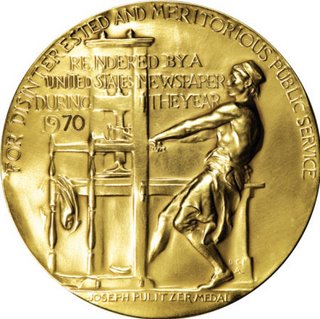
This is all I get? A medal? I thought winning this prize came with a lifetime supply of Elmer's Glue, or something else useful!

This is all I get? A medal? I thought winning this prize came with a lifetime supply of Elmer's Glue, or something else useful!

March 25, 2009

My Website Creation Journey

My business website is finally up and running. You can check it out at www.harmonyhero.com.

It has been quite a journey. In fact, it’s almost been like The Lord of the Rings. I, like Frodo Baggins, set my mind on a far out goal (the only difference is: I’m not a hobbit, I don’t have a magic ring, and I never traveled to Mount Doom), but other than that, it’s totally identical.

Nathan Jones was my Samwise Gamgee. This website wouldn’t have been possible in any way, shape or form without him. When I got discouraged and wanted to give up, he picked me up and forged ahead. He lifted my spirits, let out a primal cry to the heavens, and shook his bloody fists at the odds. I told him to stop shaking his bloody fists because it kept getting my house dirty.

Kyle Ferguson designed the logo. He’s a peach of a man with a brilliant mind for graphic design. I gave him a list of ideas, and he just ran with it. When he showed me what he came up with, I fell out of my chair in joy, and then decided what I liked the best.

The creative juices required to birth a brainchild like a website is staggering. Every time something comes together, it falls apart and needs to be rethought. One day everything looks like it fits, and the next day it doesn’t look right. This process was one of patience and learning for me. I guess I learned that accomplishing a task like this is all about putting together a huge amount of ideas, and then honing them all down into one coherent thought. It’s all about telling a story in a sentence, or even a word.

Nathan was an integral part of this journey. I’d submit an idea, he would tactfully explain why it was terrible, I would see and understand his point of view, and then we would make it better together. It was a relational dynamic of give and take, point and counterpoint.

Above all, it was fun. It’s pretty amazing to see months of work come together into a final product.

I’d like to thank the Save the Gerbils Foundation for their inspiration. This also would not have been possible without my grandma’s sister’s cousin’s friend’s belief in me. Although I’ve never personally met this distant friend of my grandma’s sister’s cousin, I was encouraged by his/her belief in me. My wife was very understanding throughout this operation. When she found me in a shed maniacally taping newspapers to the wall and solving algorithms within the text, I assured her it was all part of the website creation process.

Thanks for reading.

Ode to Nathan and Kyle

Ode to Nathan and Kyle

March 17, 2009

Good Politicians and Honest Burglars, Equally Hard to Come By

The CEO of Ford recently appeared at an ECO-nomics conference, where he put forth his master plan for resurrecting Ford from financial distress. His recovery strategy can be boiled down to one step: raise the price of gas.

It’s a fantastic idea if you work for Ford or Uncle Sam, but if you’re a consumer – sorry. Besides, isn’t a government-controlled economy all about hard workers paying for the ridiculous lifestyles of soft talkers on Capitol Hill?

Although this plan is utterly ridiculous, at least it paints a clear picture of what a government-run energy policy looks like.

It all started when the government mandated all American auto companies to make overpriced cars, instead of evil trucks and SUVs, in order to keep the “greenies” happy. However, the average American doesn’t want an overpriced car; so instead, we bought SUV’s and fairly-priced foreign cars because they’re cheaper, and they better accommodate our families. And as a result, American auto companies began to tank because none of us wanted their overpriced cars mandated by the government’s fear of the “greenies.”

So when the American auto makers began to feel the pressure, they went to Congress for bailout money. And we, speaking of the American taxpayers, watched the government waste our money on their short-sighted policies. We purchased fairly-priced SUV’s and foreign cars, which caused the American auto makers to tank because they have to make overpriced cars mandated by the government’s fear of the “greenies.” Do you see the pattern yet?

Let’s go back to this CEO’s plan: raise the price of gas. Well, it’s their only hope if the government doesn’t grow a spine.

Here’s how it works: If gas is more expensive, then we can’t buy what we want anymore. (SUVs and foreign cars) Instead, we’ll be forced to buy overpriced cars from Ford, Chrysler and GMC because that’s all they can afford to make. Why? Well, because the government supports both union rights (mobs) and “greenies” (Al Gore-ians). That’s how our government works. No one on Capitol Hill wants to offend voters, thereby eliminating a chance for re-election. So instead of taking a logical position on issues, they just equally support everything and everybody so that everyone stays happy with them. When Congresspeople do this, we call it politics. When citizens do this, we call them stupid.

What a glorious plan! Our gas becomes more expensive, making the vehicles we want unaffordable, which leads us to buy overpriced cars we never wanted, causing the politicians to jump for joy. As long as they don’t have to act like leaders and take a position, they’re just fine. It’s always safer to offend taxpayers before special interest groups. Welcome to a government-controlled economy.

March 12, 2009

Be a Lion, Be a Lamb

Although the mortgage bubble in our economy has long popped, I’m not quite finished feeling resentment toward the crooked fellows who spearheaded the corruption. They say you shouldn’t cry over spilt milk; however, after milk is spilled, the damage is done. Not so with rotten scoundrels like Connecticut Senator Chris Dodd and his crooked Congressional cronies. As long as they remain on Capitol Hill, there will be plenty of intentional spilling for personal gain.

It came as no surprise to read in the Wall Street today that Mr. Dodd is once again at the end of a long, dirty paper trail. This time it involves his cottage in Ireland. Before Fannie and Freddie bit the dust, Dodd was their #1 lobbyist, earning more in incentives than any other Congressperson. As a result, he found himself receiving some uniquely favorable mortgage deals from Countrywide. And by uniquely favorable, I mean undeniably illegal.

This interesting paper trail also reveals Dodd’s connection with Edward Downe, Jr., another weak-minded hedonist who was caught redhanded in isider trading fraud. Mr. Downe would have endured a longer sentence; but to his joy, he was given a full pardon by the Clinton administration after Dodd lobbied for his absolution in 2001. I guess birds of a feather really do flock together; even loathsome, self-seeking birds.

It churns my stomach to see that one of the top two Fannie and Freddie lobbyists is now our president. Nonetheless, I wish him the best – assuming he abandons all the shady political tricks he learned in Chicago. If his intent is to seek an agenda that profits himself, his cronies or his party before the American public, then I hope his efforts end in colossal failure – and that goes for any person who calls himself or herself a leader.

The actions of men like Dodd don’t surprise me. It’s a clear picture of the wickedness in human nature. It’s a curse that cannot and will not be lifted by scientific advancement, political correctness, self-esteem speeches or world peace. So I don’t call out Mr. Dodd with a belief that he’s some sort of atypical devil; he’s a man who has yielded to the vile yearnings of his heart. However, I feel no shame in indicting him as a terrible leader. If you’re not ready to weather temptation, or boldly confront fools, or defend the innocent, or fight for the rights of the oppressed, or demand the punishment of oppressors, or seek others’ good in spite of yours, then you need to seriously question your ability to lead.

In short, a good leader is a lion and a lamb – fiercely defending their people and confronting the wolves, while humbly placing their pride and comfort on the chopping block.

It's not an easy road, but it's the right one

It's not an easy road, but it's the right one

February 27, 2009

Get Full or Die Trying – The Cereal for Rappers

So, I’ve had a few people tell me that my blog entries are too long; I’m having trouble discerning if they really feel that way, or if they’re just frustrated because they can’t read. If it is because they can’t read, could someone give them Brooke’s number – she’s a great teacher. I would type it in this blog for them to read, but that probably wouldn’t do much good. (I love you Ken H)

On a serious note, I discovered that the generic brand of “Fruit Loops” is much better than its overpriced counterpart. Until last week, I had never purchased the generic brand, most likely because it’s called something like “Awesome Rings of Fruity Festive Fun.” I guess the brand specialists who can’t get hired at General Mills and Kellogg’s are turned away for good reason.

Speaking of bad talent, do you ever wonder how terrible you’d have to be at acting for Hollywood to not cast you in a film? I recently saw a movie in which the acclaimed rapper “50 Cent” played some kind of angry, rapper thug. I was surprised they cast him at all considering the other big names in the film. Even more surprising was how painful it was to watch a real-life rapper have such a hard time acting like an angry, rapper thug. I thought it would have been an easier role for him to step into.

I’m going to end this post now. First and foremost because I want to respect the opinion of my friend, just in case he can read. Secondly, I want to thank Brooklyn for teaching people how to read; in the words of Brooke, “We be teachin’ da readin’.” And most importantly, I just finished my third cup of coffee and must go refill before my office cronies drink all the joe.

Wait a second!… That’s it! – “Yogurty Rapper Bling-eeos!” I’ll be the sultan of cereal!

Get Full or Die Trying

Get Full or Die Trying